Deras like Sacha Sauda made the poor feel secure, cared for, loved, provided a support system and gave them dignity, says Sanjeev Nayyar.
While he has plenty of critics at home, Rajan is a favourite among foreign investors and has been credited for bringing inflation under control.
According to a study by the medical journal, the Lancet, air pollution has emerged as the deadliest form of pollution and the fourth leading risk factor for premature deaths worldwide.

A strengthening dollar, rising interest rates, tightening liquidity and a surge in oil prices - all are combining to create a toxic atmosphere for EM assets, says Akash Prakash.

No country has grown without educating its people. India's shameful lag in primary and secondary education has persisted for several decades, and the crisis in higher education is now threatening a social and political calamity, says Ashoka Mody.
BSE Midcap and Smallcap indices ended in line with their larger counterparts and closed marginally up 0.2% and 0.4%, each

"We believe in peace and we are giving a message of peace from here. But, their generals should understand that we have a large Army and we are prepared..."
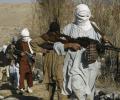
The US said that it sees positive indicators in Pakistan, but...

Top moments from around the world in the week that was.

'We want to protect our history, we want to protect our people from getting overwhelmed by the influx from Bangladesh, that is why the people of Assam are out in the streets,' says former Assam chief minister and Asom Gana Parishad leader Prafulla Kumar Mahanta.

"No problem is insurmountable," Shaheen Mistri tells Anjuli Bhargava.

Critics say Modi scores high on oratory but has delivered on few of his election campaign promises.

'As I watched Sacred Games, I kept flinching at the thought of all the thorns poised to lodge themselves in the sides of the thin-skinned,' says Mitali Saran.

'The big elephant in the room is our misguided view about the rupee.' 'India is scared that if our currency appreciates, who will buy from us. But a breakout is inevitable.'

Global working conditions have worsened in 2014.
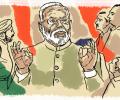
Kamal Nath argued that Modi had 'overexposed himself': By constantly pushing his own image on social media and on TV, attaching his name to multiple promises, Modi had become the face rivals could easily blame for India's chronic dysfunction.

Mark Mobius, executive chairman, Templeton Emerging Markets Group, is positive on India and believes the Indian economy is on a strong footing

'An isolationist US and a disintegrating European Union will create a power vacuum that only China is in a position to fill -- a conclusion that is uncomfortable but unavoidable,' says Nitin Desai.

Progress on the mine was blocked in August after a claim Adani failed to take into account the welfare of the yakka skink lizard and ornamental snake.
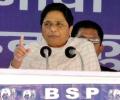
The Supreme Court had last month ruled that any appeal for votes on the ground of 'religion, race, caste, community or language' amounted to 'corrupt practice' under the electoral law.
The IIT-Madras alumnus, who moved to Canada for an MBA programme and settled there, is not new to investing in India.

Even if Modi had wanted Rajan out, the government could have done it with some finesse and tact.

CLP saw early that the pollution caused by China's rush for industrial growth would lead inevitably to demands for cleaner electricity.

Congress vice president Rahul Gandhi said the Congress would root out the weeds in the form of the Akali-Bharatiya Janata Party combine.

Trump becomes first sitting US President to pray at the Western Wall.
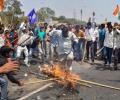
Modi and Shah can't afford to lose any of the 24 per cent Dalit vote of 2014, says Shekhar Gupta.

'The year in pictures' treks across the globe, looking back on the moments that shaped 2016. From the United States presidential race, to demonetisation in India to the refugee crisis, the news has kept pouring in. Here are our top 50 moments from the world.
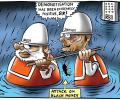
'Too much energy these three years has been invested in turning the party into an election-winning machine.' 'To recover its mojo, the Modi government needs a more impressive set of economic figures to flaunt,' says Shekhar Gupta.
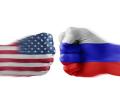
Russia continues to 'support and assist' the Ukrainian separatists, State Department Spokesperson, Jen Psaki alleged.

'It is in electronics that the gap between where we are and where we need to be is most obvious and most persistent.' 'It is not only a national security issue, but also a commercial issue,' argues Rajeev Srinivasan.

In the midst of a raging row over the conversions in Agra by Hindutva outfits, the Bharatiya Janata Party chief Amit Shah on Friday favoured a strong law to stop forcible conversions.
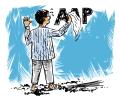
'Imagine a situation where an upright officer refuses to carry out a chief minister's or a central minister's orders that he considers wrong.' 'Can he be summarily thrashed at a meeting at your residence, or in his own office?' 'If AAP legitimises political violence, there are many, many, tougher political leaders elsewhere to draw the wrong lessons,' warns Shekhar Gupta.
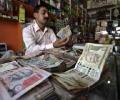
If the high security notes introduced in 2015 were kept in the system, the pain due to demonetisation can be ameliorated to a certain extent. But unfortunately, such thought process have no place in the hasty demonetisation decision.
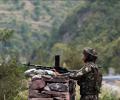
'As India and Pakistan observe the 50th anniversary of the 1965 war, the one lesson that ought to have been learned by Pakistan is how vulnerable its heartland is to a sudden attack. The only alternative to this inherent geographic weakness is to have a policy of peace with India. In an extreme scenario, India can destroy Pakistani strategic targets by just artillery shelling, crossing of the border is not even necessary,' Colonel Anil A Athale (retd)

Worried over the fallout of the Supreme Court's observations on allocation of coal blocks, India Inc wants the apex court to consider a reprieve for those allotted to genuine companies that have invested billions.
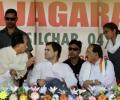
Rahul referred to the four questions he had raised in his speech in the Lok Sabha on Wednesday.

Markets ended higher, amid firm global cues, and are on track for third straight day of gains.

Beyond the barbed wire and watchtowers, though, lies a story that casts more than a little doubt on whether this dream will ever be realised. Praveen Swami reports.
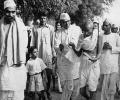
'It was a battle that took many forms, ranging from non-violent mass satyagrahas, mammoth public meetings, huge protest rallies in cities and towns to underground organisation of sabotage of communication and transport networks, an underground radio, illegal patrikas (newsletters) and the formation of parallel governments in Ballia, Midnapore and Satara.'

'Don't let anybody tell you that Kadvi Hawa is a manifesto for the fight against climate change or that it's an austere, unforgiving movie.' 'This is an intensely felt, beautifully expressed piece of cinema,' says Sreehari Nair.
